
How to Use the Magic of a Riding Sail at Anchor
Does your sailboat always lie steady as a rock at anchor? Or does it wander back and forth like a restless stallion? Use the magic of a riding sail to keep your boat under control and provide the crew with more comfort down below.
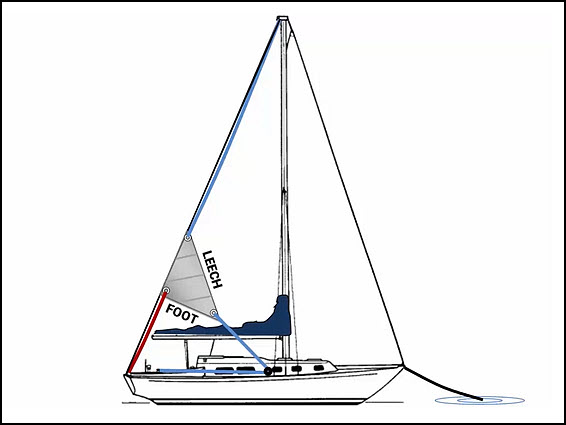
Hank on the riding sail to the backstay. Rig a pendant (green) to clear the cockpit. Hoist it with the mainsail halyard. Lead the clew sheet (red) through a sheet block (yellow) and back to a cockpit sheet winch.
Some boats behave themselves while on the hook, while others will sway back and forth from side to side, which can put lots of load on the anchor ground tackle and deck gear. In some conditions, this could cause the anchor to break free!
The riding sail is a small triangular sail made from heavy sailcloth or canvas, set onto the backstay and sheeted flat to help the boat keep its bow into the wind. Follow these three easy steps to choose and rig a riding sail.
1. Select the Right Fabric
Choose heavy-duty sailcloth or specialty canvas fabric (like that used for dodgers and Bimini tops). The sail will often have a slight hollow (concave cutout) in the leech and foot to help minimize flutter and flogging. Veteran cruisers Steve and Linda Dashew recommend full-length battens with extra heavy reinforced batten pockets to reduce chafe and extend sail life. Follow your sailmaker's advice on whether your riding sail needs battens.
2. Choose the Right Size
Sailboat ketches or yawls might choose to reef the mizzen and use it as their riding sail. For sloops and power cruisers, use the sizes below, recommended by Sailrite:
Up to 35 feet: Riding Sail should be about 12.5 square feet.
35 – 50 feet: Riding Sail should be about 20.25 square feet.
3. Rig Your Riding Sail
Make a pendant that attaches to the deck near the backstay (see illustration - green line). Hoist the riding sail with the mainsail halyard about 1/3 of the way up the backstay to help keep the way of the crew when sitting in the cockpit. Lead the sheet through a snatch or Genoa block on one side of the boat.
~~~~~~~~~~~~~~~~~~~~
Captain John's Sailing Tip:
Use these dimensions and recommendations as a starting guide. Modify as necessary to find the best shape and rigging technique for your riding sail. All vessels behave differently at anchor depending on design, displacement, windage, and protection from the elements.
~~~~~~~~~~~~~~~~~~~~
Use the magic of a riding sail for more peace and comfort at anchor. Follow these easy sailing tips for safer sailing wherever you choose to sail or cruise.
Captain John served as an enlisted navigator, ship driver, search and rescue coxswain, and instructor in the US Coast Guard. He later directed the seamanship and chart navigation departments for the Professional Maritime Training Program at the Chapman School of Seamanship in Florida. He is the author of Seamanship Secrets and Captain John's Sailing Skills Series and has written navigation and seamanship articles for Blue Water Sailing and Good Old Boat magazines.