
Captain John's Sailing Tips
Newsletter #124 ~ October 29, 2011
In Today's Issue:
* It's Your Call, Skipper!
* Sailing Skills Video-of-the-Week
* New Skippertips Site Launch Coming in November!
* Take This Five Second Easy Survey Now!
* Did You Miss the Latest Member's Articles?
* Sailing Skipper's Quotable Quotes
========================================================================
"It's Your Call, Skipper!"
Use This #1 Technique to Avoid Collisions at Sea!
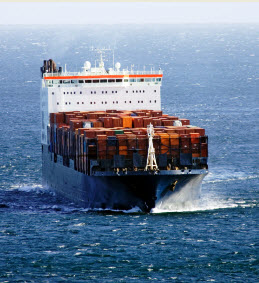
You sight a vessel off your port bow. You take a compass bearing on her bow of 010°. A minute or two later you shoot a second bearing to her bow of 013°. A minute or two later, you take a third bearing of 016°. Note how the bearings increase; this vessel has right bearing drift. Find the Drift Rate. Next, determine the rate of drift. If the bearings change at a slow pace (two degrees or less between successive bearings), the vessel has a slow drift rate. If the bearings change at a fast pace (more than two degrees between successive bearings), the vessel has a fast (high) drift rate. Note in the example above, the vessel had a high drift rate--or more than two degrees between successive bearings--so we have a low risk of collision. Does Rapid Drift Rate Ever Indicate Danger? Use extra caution when shooting bearings to huge vessels close by or to tugs with tows (see today's video presentation). The size and proximity of these vessels can show a rapid drift rate. For more accurate determination of drift rate, shoot one end of the vessel--either the bow or stern.
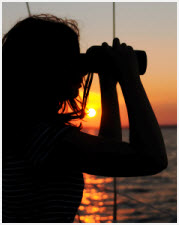
(excerpt, Navigation Rule 5)
2. Determine the Vessel Situation. If the bearing drifts toward our bow, the other vessel will cross ahead of us. If the bearing drifts toward our stern, she'll pass astern of us. If the bearing has little to no drift and remains constant, risk of collision exists. This applies to each of the three vessel situations described earlier. 3. Choose Your Action Plan. Mariners always have one or more ways available for action: change course, change speed, stop. Take action earlier than you think necessary. That way, if things don't work out as planned, you have time to try something else. 4. Make Your Actions Crystal Clear. If you change course, alter your course 60 to 90 degrees, or more. If you change speed, do so in a dramatic way. Make any action crystal clear to the other vessel to avoid confusion. Most collisions result from the inability of one vessel to understand the intentions of another. 5. Track Until "Free and Clear". Watch the other vessel like a hawk, even after they pass your vessel. Continue to monitor the other vessel until they are "free and clear" of you--which means that point where they no longer present a risk of collision, even if they change course. ~~~~~~~~~~~~~~~~~~~~
Now that you know the first steps in collision avoidance, see the"Related Articles" below to learn the next steps you need to take. Learn how to change course or speed to increase drift bearing rate, sound the correct whistle signals when you need to maneuver, and read a vessel's lights at night to determine risk of collision. All this and much more!. =========================================================================
Captain John's Sailing Skills Video-of-the-Week
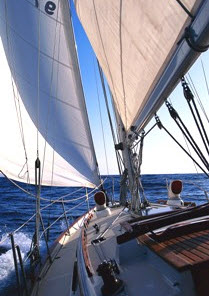
and it looks like he's all alone--no tow in site...
but how can you be sure? Did you know that commercial ocean going tugs... often tow vessels a quarter mile or more astern. and their towlines can be invisible even on a clear day? Watch this video to learn the steps for sailing safety.
How to Avoid Danger when Sailing Near a Tugboat!
** Mobile Device Users**
Click on the link above. Click on the icon beneath the main screen.
Please allow 20 to 30 seconds for the video to upload.
=========================================================================
New Skippertips Site Launch Coming in November!

The site is undergoing a complete face-lift and updating. It will be easier to use and site navigation will be a snap. We expect roll-out before November 30, 2011.
As we test things, you may notice changes in panel widths, colors, banners, or links. This should not interfere with your ability to browse or use the site in any way. Shoot me an email right away if you experience any problems. That way, we can correct the issue as soon as possible. ~ Captain John.
=========================================================================
Take This Five Second Easy Survey Now!
Like the Most on Skippertips.com?
What type of media do you like the most when you visit SkipperTips? Choose your favorite and click the "Submit Vote" button. It's fast, easy, and 100% anonymous. This will help us to continue to provide you with the information you want to see.
Thank you ~ Captain John =========================================================================
Did You Miss the Latest Member's Articles?
 Heavy Weather Sailing - Five Fast Steps to Better Boat Control!
October 27, 2011 ~ Have you ever been caught in heavy sailing weather without having reefed your sails? Learn to sail when the going gets tough with these five super heavy weather sailing secrets from the pros.
//www.skippertips.com/snip/754.htm
How to Tie a Sailing Knot that's Stronger than a Bowline!
October 25, 2011 ~ Did you realize that anytime you tie a sailing knot into a piece of line, the line loses strength? But there's one little-known sailing knot you can learn to tie that's strong, easy to tie, and causes less loss of strength than most other knots.
//www.skippertips.com/snip/753.htm
Boat Anchoring Tips - This Anchoring Table will Shock You!
October 24, 2011 ~ If you are anything like me, nothing beats boat anchoring when cruising. But...for peace-of-mind, you will need to know your "THP". Learn about this forgotten factor now.
//www.skippertips.com/snip/752.htm
=========================================================================
Sailing Skipper's Quotable Quotes...
 Foremost among the seaman's arts is the skill to manage and minimize risk by anticipating danger.

author of 'Fastnet, Force 10'
========================================================================
from International Marine / McGraw-Hill
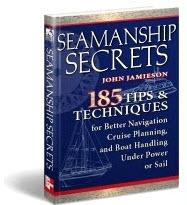 "You will be in the hands of an experienced and trusted guide."
-- Daniel Spurr, former senior editor of Cruising World magazine
"Written so clearly that navigation and seamanship will be comprehensible to anyone."
-- Dave and Jaja Martin, circumnavigators and authors
"It should be read by anyone contemplating coastal cruising or
blue water voyages."
-- Ted Brewer, famed yacht designer and veteran cruising sailor
Captain John Shares 25+ Years of Experience to Show You How to...
- Complete 90% of your navigation--before you cast off the lines.
- Determine the best "window of opportunity" to transit any inlet.
- Enter an unfamiliar harbor after dark in complete confidence.
- Extend the trouble free service of any size inboard diesel engine.
- Balance any sailing vessel in heavy weather in three easy steps.
- Use "terrain effect" to forecast weather anywhere in the world.
- Control boat emergencies with a simple method called M-A-T-E.
All this and much more. 326 pages tailored to short-handed sailors and crews.
Easy to read and loaded with crystal clear illustrations. Get your copy today!
Click On One of These Links to Order Now!
 ,