
Plan for Sailing Emergencies with 'On-Your-Feet' Training
In a real time sailing emergency, time becomes the critical factor. How can you create mental scenarios to help you step through an MOB event, fire onboard, flooding down below, or other underway emergency?
I was as nervous as a teenager on a first date when I took the 'hot seat' before the board of crusty salts for my search and rescue coxswain qualification test. It was the final step to determine whether I was up to the task. Book smarts, practical on-the-water evaluations and all else was finished. Now was the moment of reckoning. Scenario time. One by one, these master chief boatswain mates and warrant officers grilled me with "what would you do in this case?" emergency rescue problems.
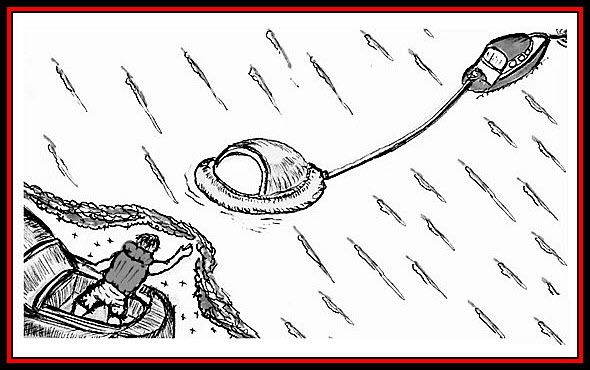
One of those has stuck with me to this day, and went something like this: You receive a call that a vessel has grounded on the rocks. The crew has no apparent injuries, but the boat has been damaged beyond repair. Storm is on the way, so you have just a few minutes to get them off their boat and onto your boat safe and sound. Describe the steps from start to finish and leave nothing out (by the way, this was before helicopter rescues were more common in similar cases).
~~~~~~~~~~~~~~~~~~~~
As you can see, there are no textbook examples of how to handle this emergency. You cannot bring your own boat too close or you are in danger of grounding and injury to your own crew. So, whatever you do must be done from a safe distance off. This may seem quite incredible, but it's meant to force you to innovate. You may have seen my article, video and eBook on how to solve this emergency challenge.
I believe there are no perfect answers or steps in an emergency. Textbooks show specific scenarios, but cannot cover all circumstances such as environmental on-scene conditions, boat handling ability, and crew capability. Rescue skippers must know how far to push the envelope. If you or your crew are injured, you cannot devote 100% of their time and effort to help those in distress. If you ground on a shoal while trying to rescue a vessel aground, you become a disabled vessel.
My board of world-class seamen and rescue veterans was looking for creativity, innovation, and forethought, not perfection. Make changes as you go, but get the process in order. The clock was ticking, so no time to delay. Get moving!
My answer went something like this: Head upwind and hold position off the distressed vessel. Establish communications. All hands in lifejackets. Fake out the towline (several hundred feet) onto deck. Faking means you lay out long figure-8 bights onto the deck. This is the fastest, most knot-free method to run out a towline or anchor line.
Let's continue...
Remove the liferaft canister from the mounts on our boat. Attach the painter (to hold the liferaft to our boat). Inflate the liferaft. Attach our towline. Release the painter. Float the liferaft downwind to the distressed vessel. They board the liferaft. We pull them back to our boat, bring them aboard and treat all crew members for injuries, shock, and hypothermia as needed.
There are no perfect works-all-the-time answers. Innovate. But train now. Get the grey matter working. That way, when things go south, the person left on deck will know the steps to take. Training works. Just look at the military or protection services. These folks train to such a high degree that they switch to "autopilot" in a crisis. That's close to where you want your sailing crew or partner to be in an emergency at sea.
~~~~~~~~~~~~~~~~~~~~
Captain John's Sailing Tip:
Recreational mariners are not obligated to rescue a distressed vessel, but you should try to respond and offer to help. The key phrase here is 'offer to help'. Always ask the skipper of the disabled vessel if they would like your help before taking action. If you find the situation too dangerous, stand off at a safe distance and communicate with the distressed vessel and the rescue agency (offer to serve as liaison). Record details of the event in the ship's logbook.
~~~~~~~~~~~~~~~~~~~~
Take the time to train your sailing crew this sailing season and during the off season. This will be time well spent to give your crew the confidence they need to sail safer on the waters of the world, wherever you choose to sail or cruise.